Vermont makes any damage that impedes vision illegal. Replacement runs roughly $300–$500 with a $250–$1,000 band, plus $150–$600 for recalibration where a camera sits behind the glass. Vermont has no statutory glass-deductible waiver.
Windshield Brief connects you with licensed local auto glass companies. We are not an auto glass contractor.
Is it illegal to drive with a cracked windshield in Vermont?
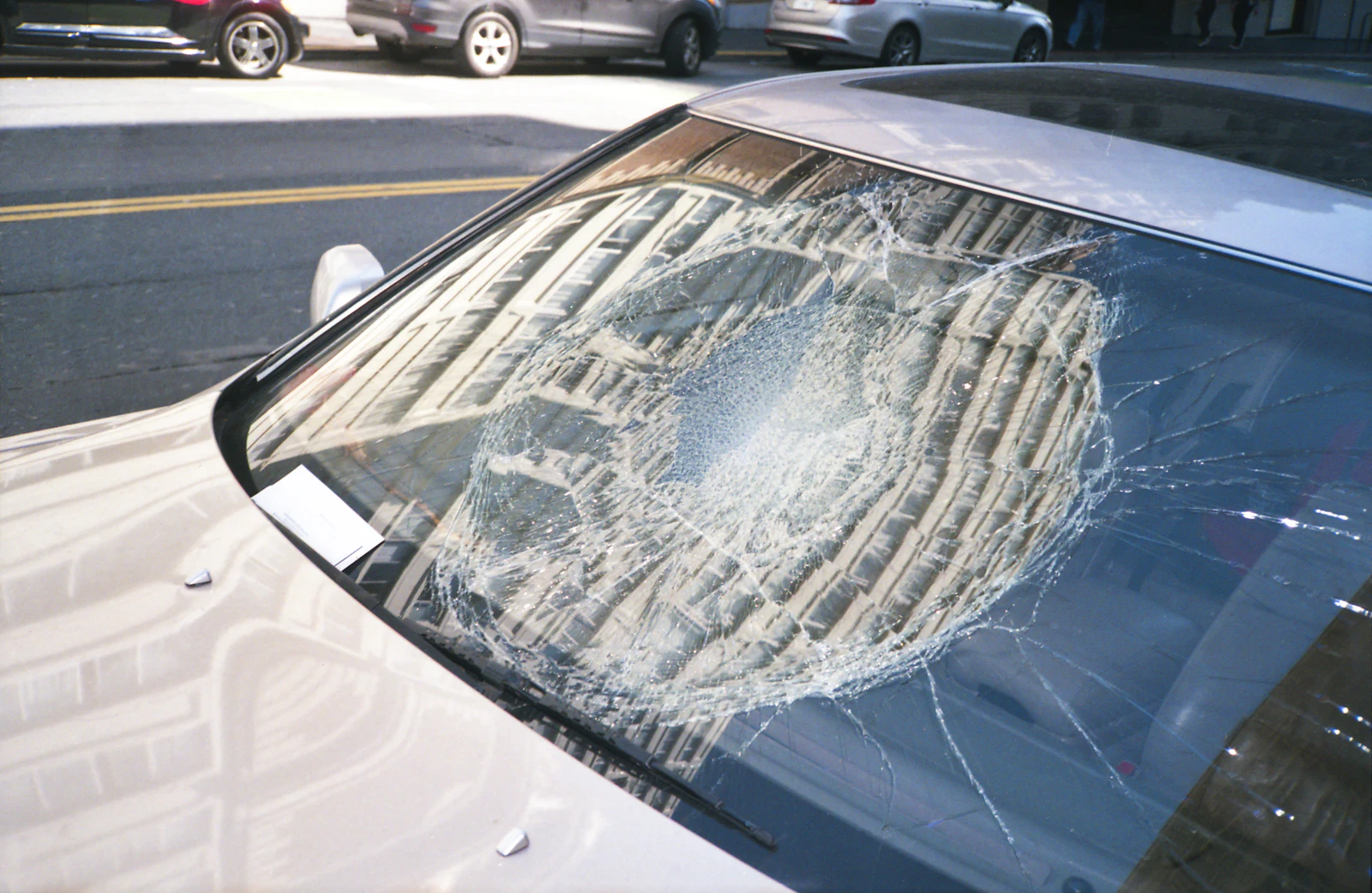
Vermont makes any damage that impedes vision illegal.
No size allowance at all where vision is impeded — one of the strictest formulations found, alongside California and Minnesota’s sight-line rules.
Federal regulations set a floor beneath every state rule: no crack or chip larger than three-quarters of an inch across, no two cracks within three inches of each other, no intersecting cracks, and nothing directly in the driver’s view.
Sources: Glass.NET (checked 2026-08-17); DOT windshield crack regulations (checked 2026-08-17).
Does Vermont waive the windshield deductible?
No. Only Florida, Kentucky and South Carolina require the deductible to be waived under comprehensive cover, and Massachusetts requires insurers to offer glass cover with a $0 or $100 deductible option. Arizona, Connecticut, Minnesota and New York permit a no-deductible add-on you must elect.
Vermont is in none of those groups, so whether you pay is set by your own policy. The more useful thing to confirm is recalibration, which most comprehensive policies fold into the glass claim rather than billing separately.
What the numbers are
| Item | Vermont position | Basis |
|---|---|---|
| State damage law | Any damage impeding vision | Glass.NET (checked 2026-08-17) |
| Federal floor | ¾ in max; no intersecting cracks; none in sight line | DOT regulations |
| Glass deductible | Policy-dependent — no statutory waiver | Policygenius / carinsurance.com |
| Replacement cost | $300–$500 typical ($250–$1,000 band) | Nationwide, 2026 |
| Recalibration | $150–$600 (~$300 average) | Nationwide, 2026 |
| Repairable crack length | Up to ~3 in; 3–6 in depends; >6 in replace | Nationwide thresholds |
Can a chip be repaired instead in Vermont?
The repair thresholds are national rather than state-set. Chips up to about the size of a quarter and cracks up to roughly three inches are usually repairable; three to six inches depends on depth and position; past six inches usually means replacement.
Position overrides length: damage in the driver’s line of sight, or reaching the glass edge where the bond carries structural load, is a replacement case however short it is.
Keep the two ideas separate — Vermont’s rule governs what is legal to drive with, while the quarter-size and three-inch figures govern what resin can actually fix.
How long before you can drive in Vermont?
Safe drive-away time is the point the bond can retain the glass in a crash and support airbag deployment — not full cure. Standard-cure urethane runs about 24 hours below 70°F, fast-cure about an hour, express as little as 30 minutes under controlled temperature.
Temperature is the variable that genuinely differs by location: an adhesive rated one hour at 70°F can need 8+ hours at 35°F. Ask what the figure is at the temperature they will be working in.
Sources
7 cited- Vermont windshield law: Glass.NET (checked 2026-08-17).
- Federal crack limits: mysafetymanager.com DOT windshield crack regulations; crackedwindshieldlaws.com (checked 2026-08-17).
- Deductible rules: Policygenius; Progressive; carinsurance.com; Glass.NET (checked 2026-08-17).
- Replacement cost: UseCalcPro 2026 calculator (checked 2026-08-17).
- ADAS recalibration: glassandauto.com 2026; Car Talk (checked 2026-08-17).
- Repair thresholds: Affordable Auto Glass; GlassFixit; Complete Auto Glass (checked 2026-08-17).
- Safe drive-away time: National Auto Glass Authority; Windshield Advisor; AGSC AGRSS; FMVSS No. 212 (checked 2026-08-17).